Feature
Debt Tracker
Record debts, loans, and repayments separately from regular expenses to see who owes whom, how much is already repaid, and what remains open.
Key benefits
- Track debts you gave or took
- Separate balance per each debt
- Partial repayments
- Debts in multiple currencies
- Debt operation history
- Debt tracking separated from regular expenses
- Clear status: open or closed
- Fits personal and family finance

Why debt tracking matters
Debt is not always a regular expense. Sometimes you lend money, borrow money, repay in parts, or receive a partial repayment.
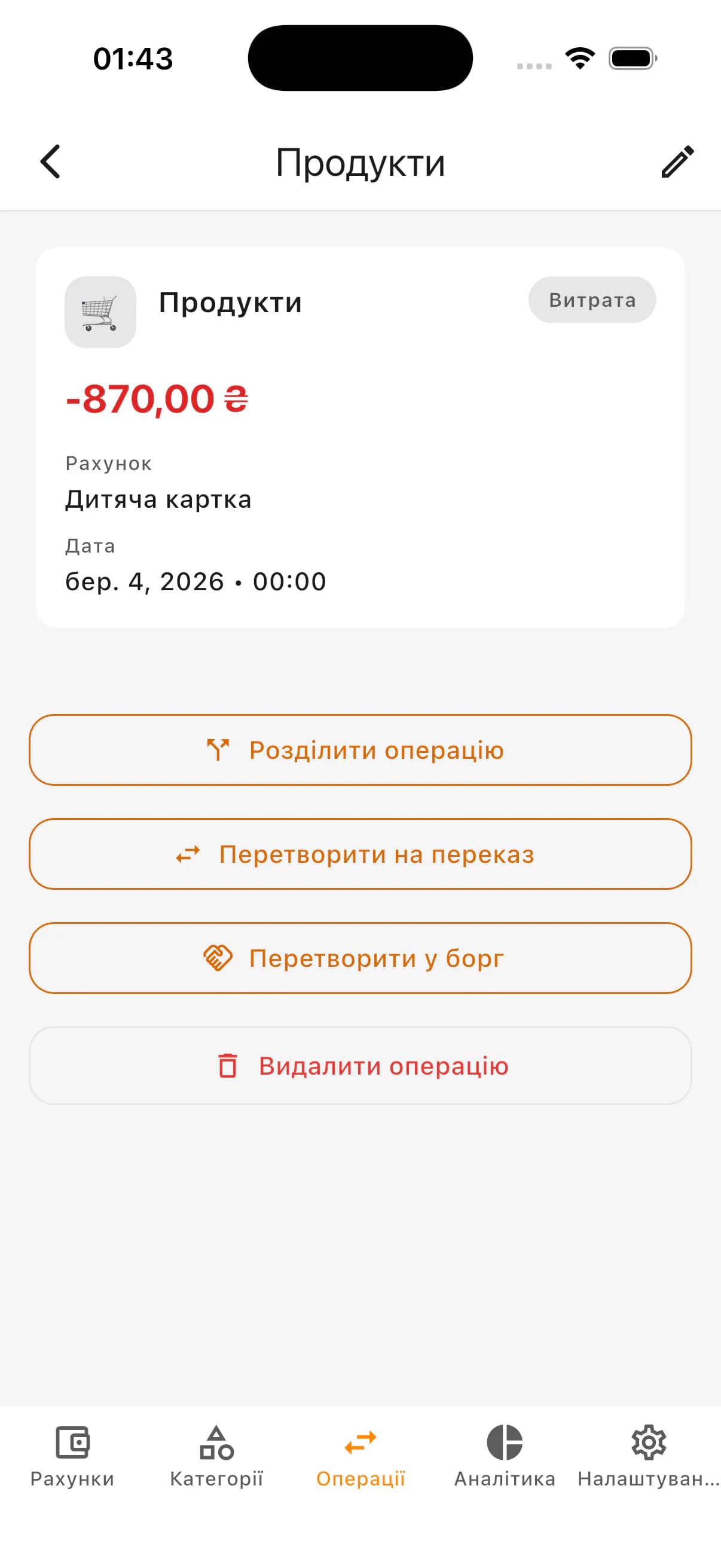
If such operations are recorded as regular expenses or income, budget analytics gets distorted. In Kiso Money you track debts separately and see original amount, repayments, remaining balance, and current status.
What debt scenarios you can track
- You lent money to a friend or relative
- You borrowed money from another person
- Someone repays the debt in parts
- You repay a debt step by step
- You keep debts in different currencies
- You need visible balance across several agreements
Debts you gave and debts you took
When you lend money, it is an amount that should return to you. When you borrow money, it is an amount you should return to another person.
Kiso Money keeps both directions in one clear structure.
Partial repayments
Debts are often repaid not in one payment but in parts. You can record each partial repayment and keep the remaining balance visible without manual recalculation.
What you can see for each debt
- Original amount
- Debt currency
- Who owes whom
- How much is already repaid
- How much remains
- Repayment history
- Current debt status
Debts in different currencies
If debt was agreed in a specific currency, it is better to keep it in that same currency (UAH, USD, EUR, or another available one).
This keeps debt balance clear even when your regular accounts and expenses run in multiple currencies.
Why debts should be separate from regular expenses
If you lend money, it is not the same as spending it forever. If someone repays you, it is not always regular income.
If debts are mixed with expenses and income, analytics can be misleading. Separate debt tracking keeps your budget clean: expenses stay expenses, income stays income, and debts keep their own logic.
When this is especially useful
- You often lend or borrow money
- Repayments happen in parts
- Several debts are open at the same time
- Debts are in different currencies
- You need an up-to-date balance for each debt
How it looks in the app: debt list
How it looks in the app: debt card
FAQ
How is debt different from an expense?
Expense means money that is spent. Debt means an obligation: money should be returned to you, or you should return money to someone else.
Can I record partial repayments?
Yes. You can record repayments in parts, and Kiso Money will show how much is already repaid and how much remains open.
Can I track debts in multiple currencies?
Yes. Debt can be recorded in UAH, USD, EUR, or another available currency.
What happens when a debt is fully repaid?
When repayments close the balance, debt can be marked as closed while keeping full operation history.
Should every repayment be recorded as a separate operation?
If debt is repaid in parts, yes. Separate entries make history and current balance much clearer.
Try debt tracking in Kiso Money
Add debts, record repayments, and keep outstanding balances visible without mixing them with regular expenses.